
Leaving a neighbourhood ugly so it stays cheap is no solution. / Following the Goethe’s Sorcerer’s Apprentice “The spirits that I called, I now can’t get rid of.”
Malaga has been going through an unstoppable transformation ever since I’ve known it. What was once a poor city has become one of the most prosperous in Spain.
This success story has been driven, for decades, in part by international tourism. The pleasant climate on the Costa del Sol attracts wealthy people who don’t know what to do with their excess money and want to settle here.
The city is simply ideal. Its location, its hinterland, the nearby great cities, the infrastructure, the sea and the lifestyle all play a part.
Neighbourhoods like the Ensanche (today’s Soho), Cruz Verde or Trinidad are unrecognisable. In the mid-nineties, the smell of dead cats drifted through abandoned buildings and empty streets. Now, entire rows of houses have gone up and many of them are rented out to tourists. The streets are full of cafés and restaurants, and the once-empty cityscape is lined with blond visitors.

Housing practically unaffordable
Malaga has followed the worldwide trend and become unaffordable. This is a major obstacle to healthy growth. How can students or skilled workers be attracted to Malaga if they can no longer afford a place to live? How can young people from Malaga start their own families when they lose out to visitors in the struggle for rental homes?
Even the patient Andalusians are raising their voices with mass protests demanding affordable housing and opposing the city’s alienation.
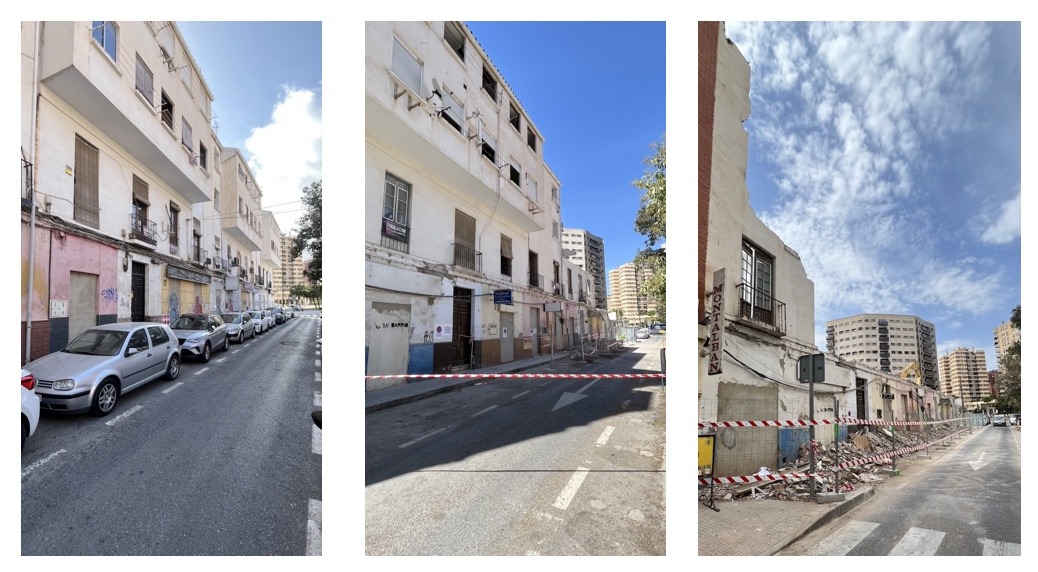
Gentrification continues without pause, including in the traditional fishermen’s district of El Perchel. An entire block was bought in 2022 by the Madrid investment fund Dazia Capital. Until then, it had belonged to an extremely wealthy family from Antequera. As soon as the purchase went through, tenants were told their rental contracts wouldn’t be renewed and that they should move out. Most were humble people paying low rents that in some cases dated back to the Franco era. For a property developer, the area is a prime cut thanks to its central location, close to the beach, its metro and suburban train links, its proximity to the old town, and the fact that El Corte Inglés (remember, El Corte Inglés is something of an institution in Spain) sits almost opposite.
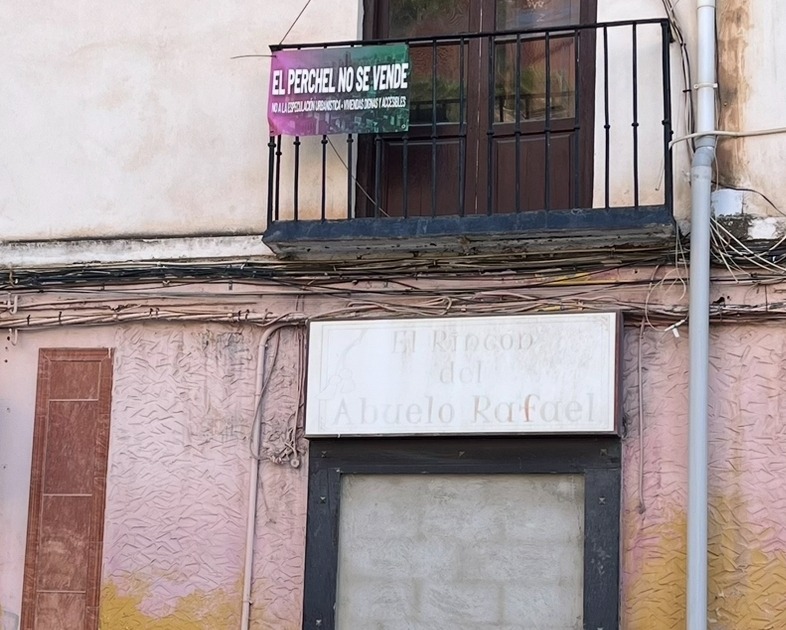
The movement ‘El Perchel no se vende’ quickly formed and managed to slow down the eviction process, but couldn’t stop it. The eloquent mayor, Francisco de la Torre, managed to calm the situation, with compensation payments arranged for tenants who were to be relocated. In April 2025, demolition of the buildings began.
So what will be built in the Perchel district now? We’ll have to wait and see. I assume it will be another high-priced flats, probably with the word “luxury” attached.
These flats will be bought by people who can afford them. The former working-class neighbourhood of Perchel will become another expensive district with the usual facilities we know from elsewhere: franchise restaurant chains, greasy pizza and burger joints, Irish pubs and 24/7 supermarkets.
And very international residents. These are still the people who bring in a lot of money and for whom the now very expensive Malaga still feels cheaper than Stockholm, Paris or New York.
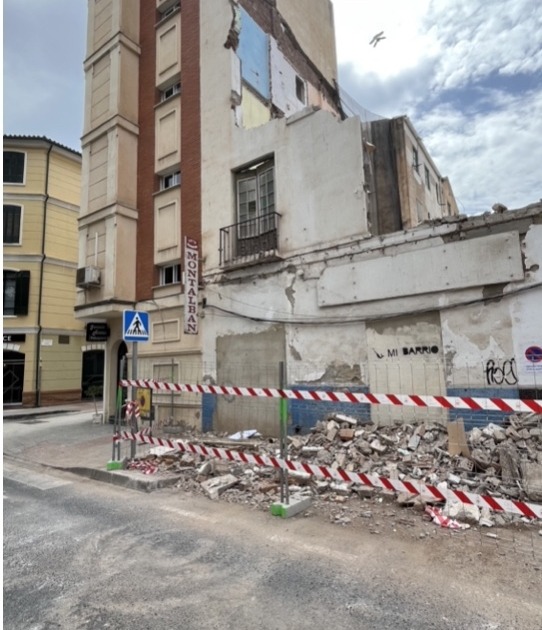
How can this trend be stopped?
Urban planners have been asking this question for decades. Blaming everything on tourism seems too easy. We have to ask ourselves what Malaga would be without all the visitors and property buyers. Certainly cheaper, but what would we live on?
The rental of holiday flats is currently under close examination, and it seems the culprit has been identified: no new VUT (Tourist Use Housing) licences will be issued in Malaga until 2028.
There is far less discussion about the creation of new hotels, which must now be four- or five-star, or about the enormous number of empty properties left unused across the city. Should second homes be taxed more heavily? Should owners be required to rent out their properties to end speculative vacancy? Should there be more social housing? Where is the state investment in affordable homes?
Given the many taxes paid in Spain, it’s surprising how little the State appears here. The unfulfilled responsibilities of high-tax Spain are pushed onto the private sector instead.
These are all sensitive issues. Ideally, growth should continue, but much more housing is urgently needed.
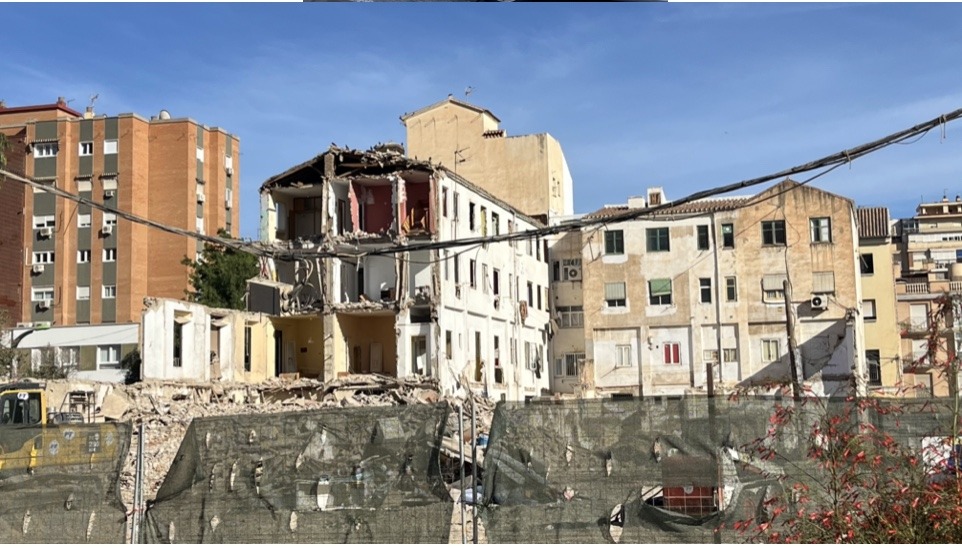
Goethe’s Sorcerer’s Apprentice tackled something similar. The apprentice calls up spirits to bring water, but forgets how to stop them and soon the place is flooding. Are there parallels?
Tip!
Our home inspector service is a straightforward and inexpensive appraisal to professional standards. It can help you to cut out practically all risks typical of buying a house in Andalusia. We recommend it for anyone looking to buy a property. More: